
Finding bed bugs in your clothing, bedding, or laundry can definitely be unsettling and even scary. And if you’re dealing with an active infestation, the last thing you want to do is accidentally spread the bugs while trying to get rid of them.
The good news is that bed bugs and their eggs can be killed using heat. But there is a right way to handle infested laundry, especially when you’re moving it from one room to another or taking it to a laundromat.
As a professional bed bug inspector in New York City, I’ve seen how easily bed bugs can end up in clothing, blankets, pillowcases, and other personal belongings.
Here is how I recommend handling laundry that may contain bed bugs, along with a few extra precautions that can help prevent them from spreading.
Does Washing Clothes Kill Bed Bugs?
One of the biggest misconceptions about bed bugs is that simply washing your clothes will kill them.
While a hot-water wash can kill a few bed bugs when temperatures are high enough, washing alone isn’t something I would rely on to eliminate every bed bug and egg. A hot wash cycle won’t kill bed bugs.
Some bugs may be washed away or killed during the agitation of the wash cycle. Others may survive, especially since the water likely wouldn’t get hot enough.
That doesn’t mean you should skip washing your laundry. (unless it is already clean)
Washing helps remove dirt, debris, Bed Bug shells, some bed bug fecal material, and odors associated with an infestation.
If you’ve ever found those little black, ink-like spots on a pillowcase or bedsheet, you’re probably looking at bed bug fecal stains. These stains are made from digested blood and can be surprisingly difficult to remove.
Even after washing, you may still see faint greyish or black marks where the stains were. Sometimes they don’t come out at all. See this photo below? It’s of some fecal stains from Bed Bugs that did not come out despite multiple washings.
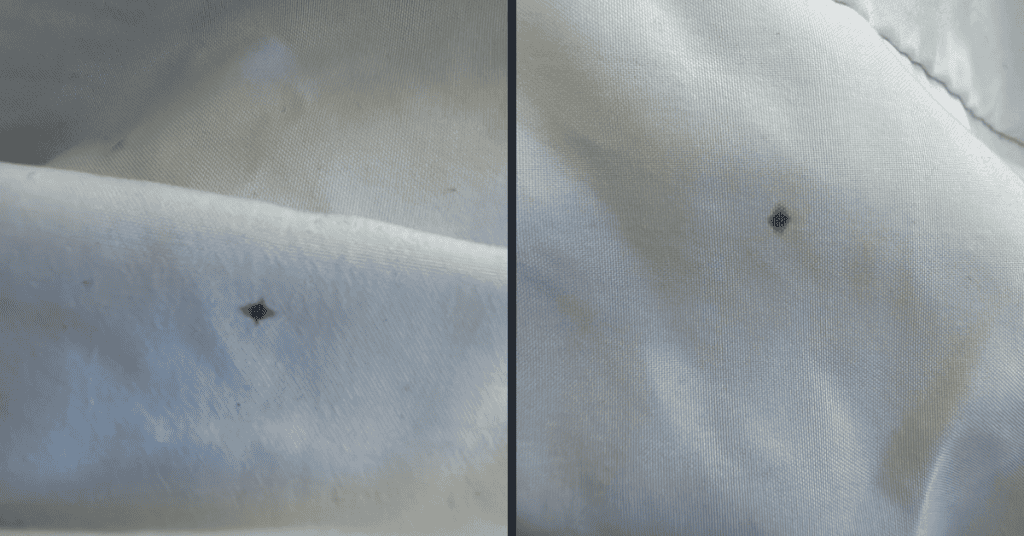
Washing can also help reduce the disgusting odor associated with heavy bed bug infestations. However, a strong infestation odor may also come from bugs and accumulated waste in furniture, cracks, and other hiding places.
Pro tip: Don’t assume a pillowcase or bedsheet is still infested just because the old fecal stains remain after proper heat treatment. Staining and active bed bug activity are two different things.
Step 1: Bag All Infested Laundry Before Moving It
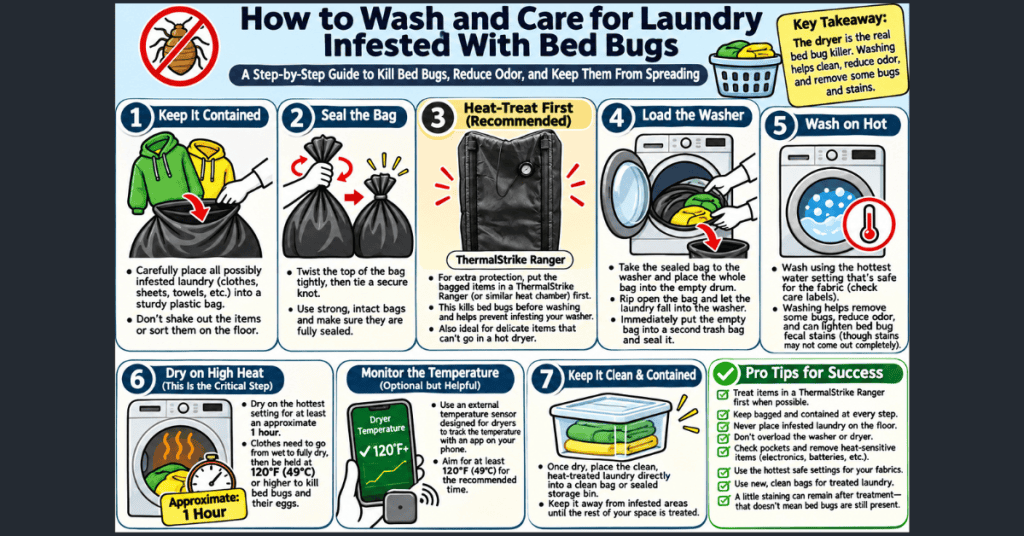
Before you start carrying clothing or bedding through your home, get some sturdy plastic bags.
The goal is to contain the bed bugs so they don’t fall off clothing or crawl away while you’re transporting the laundry.
Carefully place all potentially infested clothing, sheets, blankets, and other washable items directly into the bags.
Avoid shaking out the clothing or sorting everything on the floor. One time I was inspecting this apartment on the Upper West Side of Manhattan, and the resident began shaking the bed sheets. I had to stop them right away, because they were about to spread bugs onto the floors.
Once the bag is reasonably full, gather the opening and twist and spin it tightly.
One trick is to hold the gathered top of the bag and gently rotate the bag to twist the neck closed. Then tie a secure knot. Just be careful not to swing an open bag around.
You can also use a zip-top bag for smaller items.
Make sure the bags are completely sealed before moving them. I can’t count how many times I’ve shown up to find people with items in bags that aren’t fully sealed. Don’t do it like this:
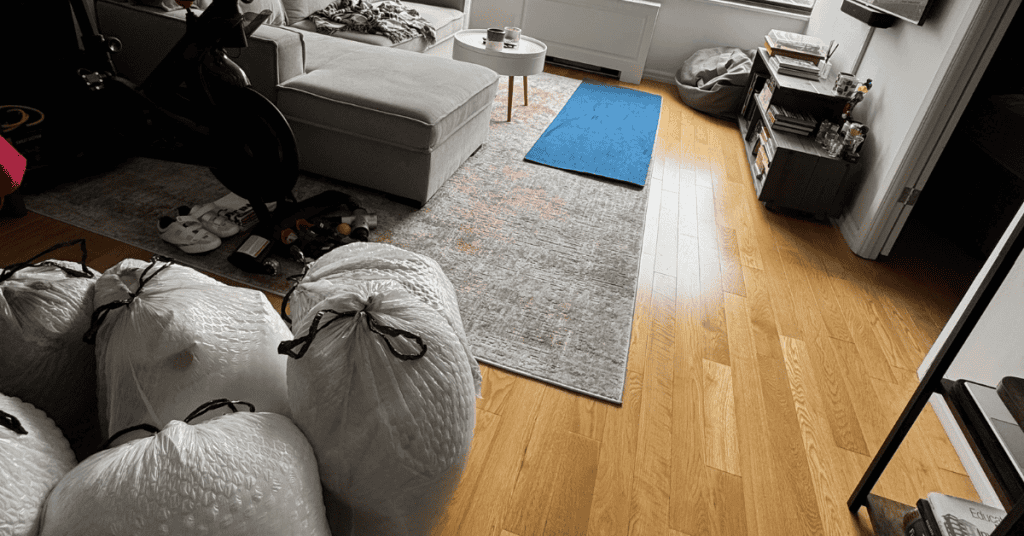
Pro tip: Don’t overfill the bags. Smaller loads are easier to handle, and they let clothing move more freely in the dryer. Not overloading the dryer will help with even heating.
Step 2: Consider Heat-Treating Your Laundry Before Washing
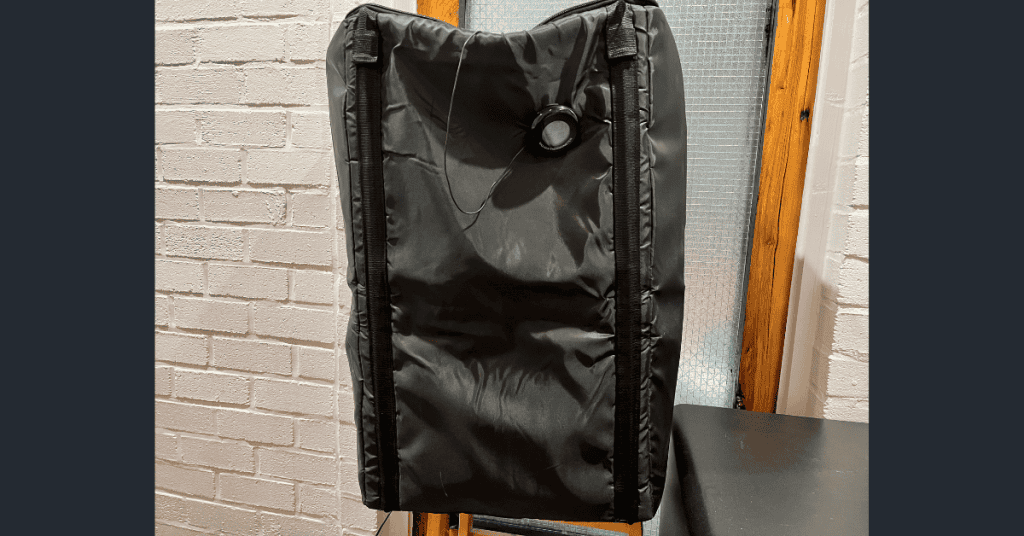
If you’re dealing with a known infestation, my first preference is to heat-treat suitable items before putting them in the washing machine. YOU CAN SKIP THIS STEP IF IT IS A MILD EARLY INFESTATION, AND JUST GO STRAIGHT TO STEP 3.
One product I like for this purpose is the ThermalStrike Ranger, a portable bed bug heat-treatment chamber.

- [Lethal Heating System] ThermalStrike uses a patented six-sided heating system that surrounds and destroys bed bugs, carpet beetles, moths, and other insects – including eggs, larvae, and adults. Heat in excess of 120 degrees penetrates deep into cracks and small openings.
- [Commercial Grade Construction] A fully sealed inner liner constructed of hospital grade heating pad material traps the bugs inside the unit. Additional layers of insulation keeps the heat inside the Ranger to minimize electrical power draw while seven thermostats continually monitor and control the heating system.
- [Easy to Load and Operate] Place luggage directly into the unit or load the Ranger like a laundry hamper. Heat comes from all sides and eliminates cold spots, so there is no moving air, motors, or moving parts which can break down. Items being treated can touch the interior walls.
- [Everything You Need] Includes a built-in timer (two, four, and eight hour cycles) which turns the unit off and a thermometer which clips onto the front of the unit and shows the current and maximum temperature reached during a heat treatment.
The advantage of treating items first is that you’re killing bed bugs before you begin handling and washing the laundry. And, yes you can use this Thermal Strike in place of washing and drying if the items are already clean.
This can reduce the chance of live bugs escaping while you transfer clothing into the washer or worse yet infesting the washing machine. If you are using a laundry mat, then you’ll want to put the items through the Thermal Strike first so you don’t infest the machines.
The best thing is that you can use this portable heat-treatment chamber for clothing, bedding, books, and all kinds of things. Be sure to check out their FAQ page, which goes over what you can and cannot put in there.
However, there are a few important things to remember.
The heat must reach the areas where bed bugs could be hiding, including the center of folded or layered materials. So monitoring it with the thermometer that it comes with is important.
Follow the manufacturer’s instructions for loading, treatment temperature (normally 120°F), and duration. The Thermal Strike has 3 time settings: 2, 4, or 8 hours. Don’t pack the chamber too densely, and don’t assume a tightly packed bag of clothing will heat evenly. The best thing is that it comes with a thermometer string that you can tuck into the densest part of your stuff.
For items that can tolerate it, I prefer this sequence:
- Heat-treat the belongings in the ThermalStrike Ranger.
- Wash the clothing & bedding to remove dirt, odors, and some fecal residue.
- Dry the clothing thoroughly on the appropriate heat setting. (for extra bed bug killing insurance)
This adds an extra level of protection and makes the washing process less stressful.
Keep in mind that you don’t need to buy a portable heat chamber to successfully treat ordinary washable laundry. A properly used clothes dryer can also kill bed bugs and their eggs.
Step 3: Transfer the Bagged Laundry Directly Into the Washer
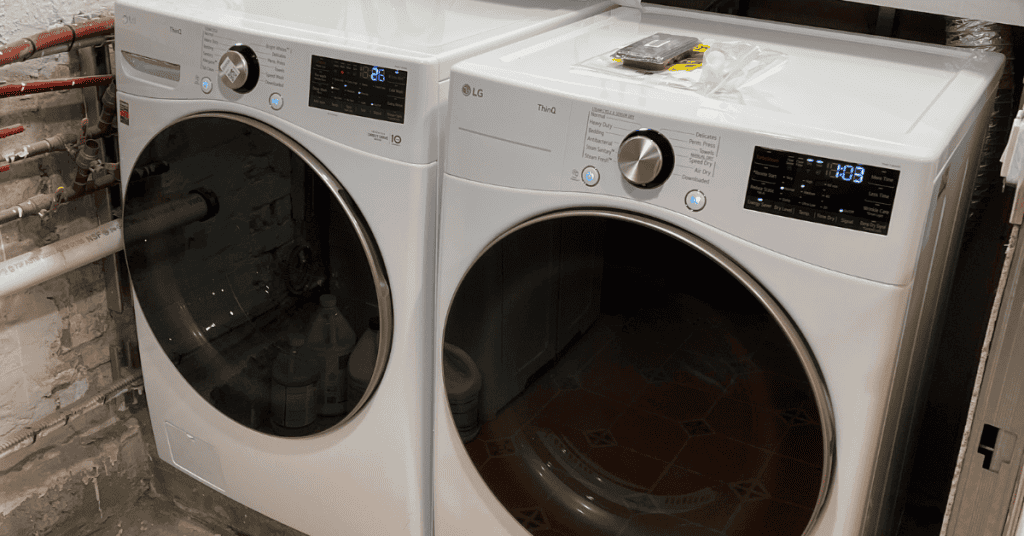
If you’re taking untreated laundry directly to the washing machine, this is where you need to be especially careful.
You don’t want to open a bag of infested clothing and start pulling individual items out in the laundry room.
Instead, keep everything contained until you’re ready to load the machine.
Open the washer first. Then place the sealed laundry bag into the empty drum.
Carefully open or tear the bag inside the drum, allowing the clothing to fall directly into the machine.
Have a second trash bag ready so you can immediately contain the empty, potentially contaminated bag.
Do not leave the used bag sitting on the floor or on top of the washer.
Remove the empty plastic bag before starting the washing machine. Never run a wash cycle with a plastic trash bag inside.
If you have access to a top-loading washer, this process can be fairly straightforward. With a front-loading machine, you’ll need to be more careful to keep the clothing contained while opening the bag.
Pro tip: Have everything ready before you open the bag. This includes your detergent, the empty disposal bag, and access to the washer. The less time your laundry spends exposed, the better.
Step 4: Wash Your Clothes Using the Hottest Safe Water Setting
Once the clothing is inside the washer, select the hottest water setting that the fabric can safely tolerate.
Check the care labels first.
Cotton sheets, towels, and certain other fabrics can usually tolerate hotter washing temperatures than delicate clothing.
Use your regular laundry detergent. You don’t need special bed bug detergent, pesticides, or laundry additives.
In fact, I would avoid adding insecticides or other pest-control chemicals to your washing machine.
Remember, the purpose of washing is to clean the laundry. We’re going to rely on the dryer for the critical heat-treatment step.
If the clothing contains visible fecal stains, you can also use a fabric-safe stain remover according to its label.
Just don’t expect every stain to disappear.
Step 5: The Dryer Is the Most Important Step
This is the step I would pay the most attention to. (As well as STEP 2: if you are going that route)
Bed bugs or their eggs don’t survive high temperatures. But the heat needs to reach the insects and stay high enough for long enough.
Research at Virginia Tech University shows that exposure to about 118°F for 90 minutes can kill bed bug eggs under controlled conditions. The eggs take longer to kill, while the bed bugs themselves will die off quicker.
That doesn’t mean you can set a dryer to 120°F, run it for a few minutes, and assume everything is dead. This is where one of those external temperature monitors can help. (see below) You can toss this cube into the dryer and through an app, you see exaclty what temperature the inner chamber is getting to.
The clothing itself needs to reach the necessary temperature.
And if you’re putting wet laundry into the dryer, there’s another factor to consider. Because you may need to keep it in the dryer for a few hours.
The reason is that during the first part of the cycle, the dryer is removing moisture from the clothing. All of your wet fabrics will remain cooler than the surrounding hot air.
This is why I prefer a longer drying cycle., or better yet, throw everything into one of the heaters like the Thermal Strike Ranger.
For dryer-safe clothing, I would generally use the hottest dryer setting for at least 90 minutes. I have seen one too many cases where someone’s dryer didn’t get hot enough and they reinfested themselves. As long as your fabrics can tolerate that high heat treatment. (disclaimer: Check your dryer and the fabrics before doing this)
The exact time needed will depend on the dryer, load size, fabric thickness, and how wet the clothing is.
For an ordinary load of dry clothing, a sufficiently hot dryer cycle may require considerably less time. But when you’re starting with wet clothing, I prefer to allow extra time.
And remember, more time can come with problems. Excessive heat can shrink clothing, damage elastic, or ruin certain fabrics.
How Hot Does the Dryer Need to Get?
I would aim for the clothing itself to reach at least 120°F. Then you will need to ensure that it is kept at that temperature for a proper amount of time. (According to entomologist Dini Miller at Virginia Tech 90 minutes)
A higher verified treatment temperature (with an external temperature thermometer) may reduce the time needed, but the important thing is to heat the entire load, not just the air around it.
One option is to use a heat-safe temperature-monitoring device designed for the conditions inside a clothes dryer. Like this one:
These devices allow you to monitor temperature readings through an app.

- NO INSTALLATION FRUSTRATION: While other temperature sensors require complicated, glitchy setup, SensorPush skips the headache with a setup process that takes seconds. Whether you need an outdoor thermometer, a room thermometer, a fridge thermometer, a freezer alarm on your phone or a humidity and temperature monitor anywhere else, SensorPush makes it easy!
- SIMPLE & RELIABLE: Sensors are manufactured with reliable hardware, a 1-2 year battery life in typical conditions, & excellent Bluetooth range. The app, available in 6 different languages, updates when in range of the sensor (within 100m, line of sight), so data is ready to view at your convenience. For access anywhere, add the SensorPush G2 WiFi Gateway (sold separately) to create an ideal WiFi temperature sensor or humidity monitoring solution for greenhouses, freezers & more.
- 24/7 MONITORING AND REPORTING: Once connected, SensorPush constantly records temperature, humidity, heat index, dew point, and VPD. It includes 45 days of on-board data logging and unlimited in-app storage, and allows you to easily zoom and scroll through years of data or quickly export it to your favorite software for further analysis. With the addition of a G2 WiFi Gateway (sold separately), you also get remote access and unlimited cloud storage to view data remotely in-app or on your computer.
- HEAT INDEX MONITORING: SensorPush now calculates Heat Index, showing how hot it really feels by combining temperature and humidity. Get a more accurate view of thermal comfort and heat stress risk, helping you stay safe and comfortable in warm weather.
- VERSATILE APPLICATION: The possibilities are endless! SensorPush HT.w is splash/water resistant, and is ideal for freezers and refrigerators, attics, basements, guitars, wine cellars, nurseries or grow tents, reptiles, terrariums and other pets. It's a perfect greenhouse thermometer, remote temperature monitor for RVs, or chicken brooder thermometer.
Make sure the device is specifically rated for use inside a rotating, heated dryer. Many wireless temperature sensors are not
designed for this environment and could be damaged or create a safety hazard. So read your FAQ’s before purchasing.
A temperature reading from one location also doesn’t guarantee that every part of a bulky load has reached the same temperature.
Pro tip: Don’t overload the dryer. Clothes need room to tumble so the heat can circulate throughout the load. Two smaller loads are often better than one tightly packed load.
Step 6: What About Delicate Shrinkable Clothing That Can’t Go in the Dryer?
Yup, not everything can tolerate a hot dryer.
Wool, silk, certain synthetic fabrics, embellished clothing, and items with delicate elastic or adhesives may shrink or become damaged.
This is another situation where a portable bed bug heat-treatment chamber, such as the ThermalStrike Ranger, may be useful.
- [Lethal Heating System] ThermalStrike uses a patented six-sided heating system that surrounds and destroys bed bugs, carpet beetles, moths, and other insects – including eggs, larvae, and adults. Heat in excess of 120 degrees penetrates deep into cracks and small openings.
- [Commercial Grade Construction] A fully sealed inner liner constructed of hospital grade heating pad material traps the bugs inside the unit. Additional layers of insulation keeps the heat inside the Ranger to minimize electrical power draw while seven thermostats continually monitor and control the heating system.
- [Easy to Load and Operate] Place luggage directly into the unit or load the Ranger like a laundry hamper. Heat comes from all sides and eliminates cold spots, so there is no moving air, motors, or moving parts which can break down. Items being treated can touch the interior walls.
- [Everything You Need] Includes a built-in timer (two, four, and eight hour cycles) which turns the unit off and a thermometer which clips onto the front of the unit and shows the current and maximum temperature reached during a heat treatment.
Unlike a tumbling dryer, the chamber allows items to remain stationary during treatment.
However, that doesn’t automatically make it safe for every delicate fabric. The Thermal Strike has a website and a FAQ page. You can also email the company with your specific itmes and ask if they think it will tolerate the heat.
Unfortunately, some materials can still be damaged by long heat exposure. This is true even when they aren’t tumbling around. So research everything before you start heating. And if you are ok with some items possible getting damaged then I would say just go for it!
Check the care instructions and the heat chamber manufacturer’s recommendations before treating anything valuable.
For especially delicate or expensive items, consider consulting a professional cleaner familiar with bed bug-contaminated belongings. If you research this I am sure you can find one in your city.
Pro tip: Don’t put items containing batteries, aerosol products, flammable liquids, or other heat-sensitive materials into a portable heat chamber. Unless the manufacturer specifically approves them.
Step 7: Keep Clean Laundry Away From Infested Areas
This is one of the most overlooked parts of the process.
You can successfully kill every bed bug in a load of laundry and then accidentally reintroduce bugs by placing those clean clothes back into an infested bedroom.
Once the laundry has completed its heat treatment, place it directly into a clean bag or sealed plastic storage container.
Don’t use the same bag that held the untreated clothing.
If you’re using a laundromat, bring fresh bags specifically for your clean laundry.
Avoid placing treated clothing on shared folding tables or other surfaces where potentially infested belongings may have been sitting.
At home, store the treated laundry in a clean, isolated area until the infestation has been addressed.
Since you will need to keep wearing clothing during treatment, set aside a supply of heat-treated clothes in sealed containers.This gives you access to clean clothing without repeatedly going back into potentially infested drawers or closets.
A Few More Tips from Doctor Sniffs for Handling Bed Bug-Infested Laundry
Here are a few additional precautions I strongly recommend:
- Never sort infested laundry on the floor. Bed bugs can crawl away while you’re separating clothing.
- Don’t shake out blankets or sheets. This can dislodge bugs and spread them into other areas.
- Keep untreated and treated items separate. Use clearly labeled bags or containers if necessary.
- Don’t carry loose laundry through hallways. This is especially important in apartment buildings and shared laundry facilities.
- Don’t forget laundry baskets and hampers. Bed bugs can hide in seams, handles, joints, and small crevices. You can throw your entire laundry basket through the Thermal Strike
- Check pockets before heat treatment. Remove electronics, batteries, lip balm, and anything else that could melt or be damaged.
- Avoid placing clean laundry on the bed. If the room still has an active infestation, your clothing will become reinfested.
- Don’t assume your closet is safe. Bed bugs can hide in clothing and belongings, particularly when an infestation is extensive.
- Use clean bags after every treatment. Never put successfully treated clothing back into an untreated laundry bag.
Can Bed Bugs Survive in a Washing Machine?
Yes, bed bugs can potentially survive a washing cycle if they aren’t exposed to lethal temperatures. Washing machine water will never stay at the proper temperature long enough.
This is one reason I prefer heat-treating suitable items before washing whenever possible.
However, that doesn’t mean every washing machine used for infested laundry will become infested. Because many of the bugs will cling to clothing or be washed down the drain.
The bigger concern here is allowing live bugs to escape while loading or unloading clothing. Especially if you don’t properly seal the bags like these here:
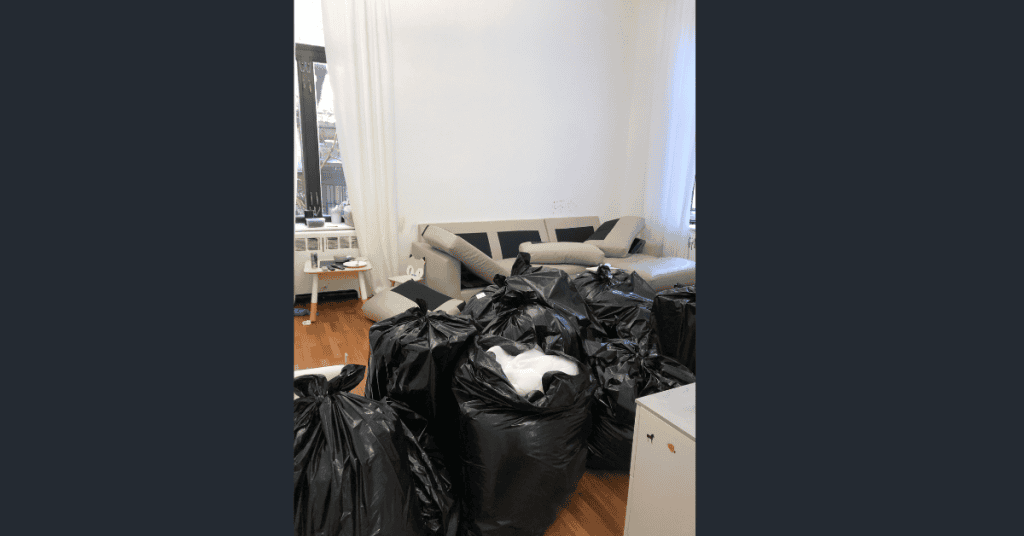
Follow all of our advice for careful handling, sealed bags, and proper heat treatment and you will be in a better place.
If you’re using a shared laundry room, pay particular attention to the surfaces where you’re placing your belongings.
And don’t forget to check the outside of your laundry bag or basket before carrying it back into your apartment. If you had a bad infestation then there could be bugs on the outside too!
Can A Washing Machine Get Rid of Bed Bug Smells and Fecal Stains?
Washing can help, but there are limits, especially with the Bed Bug droppings. The black ink-like stains will not usually come out.
Bed bugs produce chemical signals, and heavy infestations can have a noticeable odor. The smell is sometimes described as musty or slightly sweet.
Washing clothing and bedding can remove the majority of the odor-causing material.
But if the infestation is still active in the room, washing your bedding won’t eliminate the source of the smell.
The same goes for fecal stains.
Bed bug fecal spots often look like someone touched the fabric with a black ink pen. These stains can soak into the fibers, making them difficult to remove completely. See this pillow case that was washed mulitple times but the stains are still there. They will just fade a little bit, but usually not go away.
Even after several washes, you will still see some dark discoloration, that looks like pen marks.
Lastly: Treat the Laundry Without Spreading the Bugs
When you’re dealing with bed bugs, how you handle your laundry is just as important as how you wash it.
Keep potentially infested items sealed until they’re ready for treatment. Avoid carrying loose clothing through your home and building hallways. And definitely don’t put treated laundry back into areas where bed bugs may still be hiding.
If you have access to a ThermalStrike Ranger, heat-treating suitable belongings before washing is the best way to ensure total elimination.
Otherwise, careful bagging, washing, and a properly heated dryer cycle can be an effective approach for ordinary washable fabrics.
And remember, treating your laundry doesn’t eliminate an infestation in your home.
Bed bugs can still be hiding in bed frames, headboards, furniture, baseboards, couches, and other locations.
If you’re finding bed bugs in your clothing or bedding, it’s important to investigate where they’re coming from rather than relying on laundry treatment alone.