
Yes, you can definitely bring bed bugs home from a thrift store. Use this simple routine of inspecting before you buy, sealing items for the ride home, and heat-treating what you can. This will keep the risk low enough to keep shopping. Bed bugs travel on belongings and can live a long time without blood, so the risk remains. Plus, secondhand goods pass through many homes before they reach a store shelf.
The goal is to shop with a plan. All items need treatment at home, and some aren’t worth the risk.
Worries about bed bugs from thrifting make sense, because a clean-looking item can still hide eggs or baby bed bugs in a seam. Once you know where they hide and which treatments work on which items, you can make calm, confident choices at the register.
Which Secondhand Finds Are Most Likely to Carry Bed Bugs?
Items with padding, deep seams, and close contact with sleeping people carry the most risk. Mattresses, sofas, and other upholstered furniture top the list, while clothing, books, electronics, and bedding fall in the middle because you can heat-treat them. People mistakenly think hard goods carry less risk, but this is where you can let your guard down and introduce an infestation.
Why You May Want to Skip Upholstered Furniture and Mattresses
Upholstered furniture and mattresses give bed bugs exactly what they want: dark folds, thick padding, and a spot near where people rest. A used sofa or armchair has stapled fabric, hidden frame corners, wooden frames, and foam you cannot see inside.
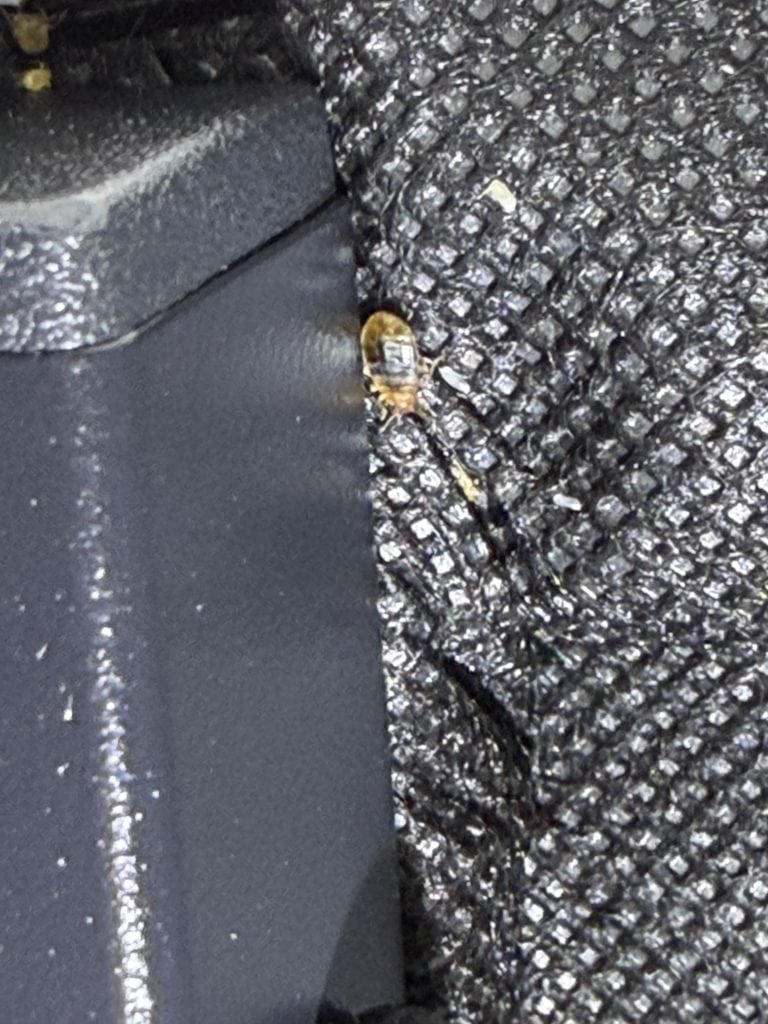
The bigger problem is treatment. You can wash a shirt, but you cannot put a sofa in a dryer. Steam and vacuuming reach the surface, not the core of a cushion or wooden frame.
Bed bugs also last a long time without food. The EPA notes they can survive several months to a year without feeding, so a couch that sat in a back room for weeks can still carry live insects.
Bedroom furniture deserves extra care, and may not be worth it. Padded headboards, box springs, and even nightstand drawers sit close to where someone slept. A few years ago I did an inspection for these folks in Bushwick, Brooklyn; they saw this free, simple headboard on the side of the road. Unfortunately, they did not think to check the seams for bed bugs, because this one item started an infestation.
If you love a used upholstered piece, plan for a full inspection and a sealed quarantine that may last a year before it comes inside.
Can Thrift Store Clothes and Bedding Carry Bed Bugs?
Thrift store clothes and bedding can carry bed bugs, though they sit lower on the risk scale than mattresses. Bugs and eggs tuck into seams, quilted panels, linings, and folds. Heavy winter coats, suits, and quilts give them more places to hide than a plain T-shirt.
The good news is that secondhand clothing and linens respond well to heat. Most fabric that survives a hot dryer can be treated fully at home, which makes these some of the safest secondhand items you can buy.
If you are geting items that cant go into a dryer you may wan to tinvest in the Thermal Strike Ranger heater. It’s a small heat box that just plugs in and allows you to safely heat things that you place inside. It doesnt shrink clothing like a dryer.

- [Lethal Heating System] ThermalStrike uses a patented six-sided heating system that surrounds and destroys bed bugs, carpet beetles, moths, and other insects – including eggs, larvae, and adults. Heat in excess of 120 degrees penetrates deep into cracks and small openings.
- [Commercial Grade Construction] A fully sealed inner liner constructed of hospital grade heating pad material traps the bugs inside the unit. Additional layers of insulation keeps the heat inside the Ranger to minimize electrical power draw while seven thermostats continually monitor and control the heating system.
- [Easy to Load and Operate] Place luggage directly into the unit or load the Ranger like a laundry hamper. Heat comes from all sides and eliminates cold spots, so there is no moving air, motors, or moving parts which can break down. Items being treated can touch the interior walls.
- [Everything You Need] Includes a built-in timer (two, four, and eight hour cycles) which turns the unit off and a thermometer which clips onto the front of the unit and shows the current and maximum temperature reached during a heat treatment.
You may want to skip trying on clothes in the store, because it it may be carrying body lice which is another risk. If you must try them on, then just wear leggings or a fitted top underneath, and wash what you wore once you get home.
Can Bed Bugs Hide in Wood Furniture, Books, and Electronics?
Bed bugs can hide in wood furniture, books, and electronics, especially if they came from an infested home. For used wooden furniture, check screw holes, cracks, joints, and the inside corners of drawers. If its smal l enough put it into the Thermal Strike heater above.
Books offer gaps along the spine, and people read in bed. Electronics have vents and seams, and small gadgets that sit near a bed are worth a closer look. These items cannot go in a washer, so inspection and isolation or the Thermal Strike heater is a must.
How Do You Inspect Thrifted Items Before Buying?
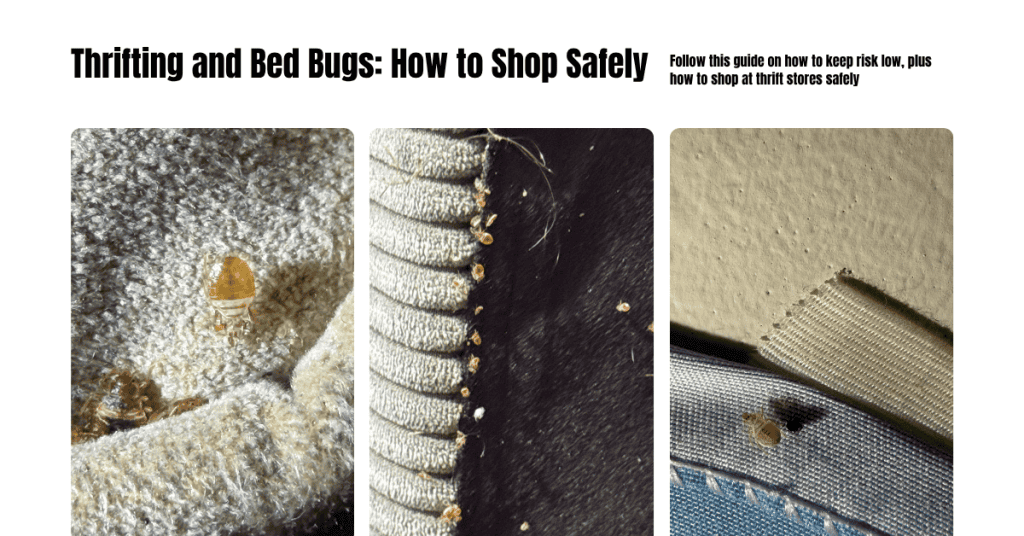
Inspect every item by checking the tight, dark spots where bed bugs rest, using your phone flashlight and a few minutes of patience. A good bed bug inspection looks for live bugs plus the stains, shells, and eggs they leave behind.
Here is a recent article on what bed bug shells look like to help you inspect.
What Signs of Bed Bug Activity Should You Look For?
Look for four main signs of bed bug activity:
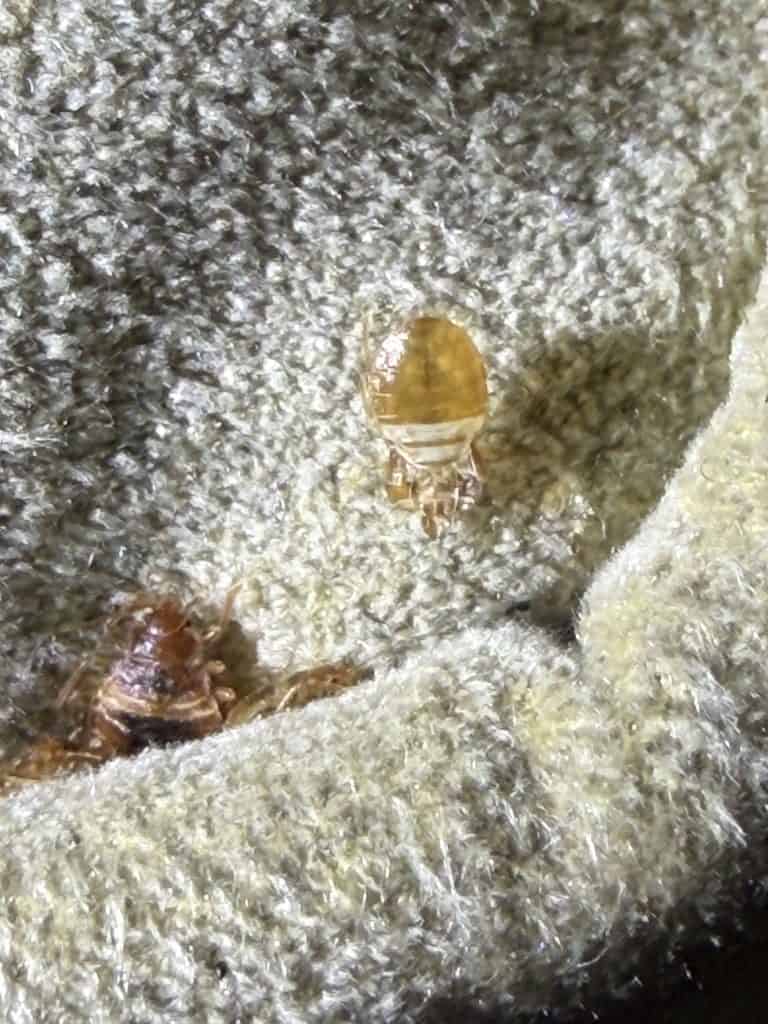
- Live bugs. Adults are red to dark brown, flat, oval, and a little smaller than an apple seed, while young ones are tan and harder to spot. Here is a guide to bed bug size.
- Dark spots. Bed bugs leave tiny black or dark brown stains from fecal droppings, often in clusters along seams.
- Eggs and shed skins. Eggs are pale and about the size of a pinhead. Empty skins look like light brown copies of the bug.
Bring a small flashlight or use your phone light. Store lighting is rarely bright enough to show dark specks in dark fabric.
Where Should You Check Clothing and Linens?
Check thrift store clothing at the places where fabric doubles over. Turn each piece inside out and run your eyes along every seam.
Focus on these spots:
- Collars, cuffs, and waistbands
- Pockets, inside and out
- The space between an outer shell and its lining
- Quilted stitching on coats and comforters
- Hems on sheets and pillowcases
But honestly, I wouldn’t waste much time inspecting these items, because you are going to heat-treat them regardless of what you find. So do a quick once over, but after you purchase them, seal them in a bag until you put them into a heat box or dryer.
How Do You Check Furniture Seams, Joints, and Undersides?
Check used furniture from every angle, including the bottom. Flip cushions and look underneath, then unzip covers if they open.
On upholstered pieces, follow the piping and decorative trim, and look along the fabric edges where it is stapled to the frame. Tip the piece over to see the dust cloth on the underside, since bugs often gather near those staples.
On wood and metal pieces, shine your light into screw holes, cracks, and joints. Pull drawers all the way out and check the corners and the runners. It also helps to ask staff whether the store has any bed bug screening policy.
When Should You Leave an Item Behind?
Leave an item behind if you see any live bug, eggs, or clusters of dark spots along seams. A great price never makes up for the cost of treating a home.
Also walk away from mattresses and box springs unless you are prepared for the risk, and from upholstered pieces you cannot inspect well. Keep in mind that a clean look proves nothing. Eggs and young bugs are easy to miss, so passing your inspection only lowers the odds.
If you spot signs on one item, tell the staff and skip nearby pieces from the same section.
How Can You Treat Thrifted Finds Before Using Them?
Treat thrifted finds by matching the method to the item: dryer heat for fabric, a heat chamber or freezer for small goods, and vacuuming plus steam for furniture surfaces. Each method has limits, so good bed bug prevention starts with keeping items sealed until treatment is done.
Bag and Isolate Purchases During Transport and Before Treatment
Seal your finds in plastic bags at the store and tie them shut before they go in your car. You may want to wrap furniture in plastic before it goes into your car.
Bagging contains bed bugs; it does not kill them quickly. Since they can live for months without a meal, leaving a sealed bag in the closet is no fix. Use the bag to move items straight to treatment.
Keep bags out of bedrooms and off couches. A garage, porch, entryway, or laundry area works well as a holding zone. Keep furniture sealed in plastic until you have vacuumed, steamed, and inspected it again.
How Do You Use a Dryer for Clothing and Linens?
Dry already-dry, dryer-safe items on the highest heat they can handle for at least 35 – 45 minutes. That time counts from when the load is dry and hot.
Wet laundry is different. If you wash first, the dryer spends its early time removing water, so the fabric does not reach killing temperatures right away. Run the full drying cycle, then add the 35 – 40 minutes of high heat on top. Washing alone is not enough.
A few tips from our experience:
- Do not overload or pack the dryer, because tight loads heat unevenly.
- Move items straight from the bag into the drum, and seal and toss the bag in an outdoor trash can.
- Check care labels. Wool, silk, and some vintage pieces may shrink or fade, so consider a heat chamber or freezer for those.
When Is a Portable Heat Chamber Worth Considering?
A portable heat chamber makes sense if you thrift often and buy shoes, bags, books, or other items that cannot go in a dryer.
The ThermalStrike Ranger is one example of this kind of product. It is a soft-sided chamber you load with items and run for a set time. Treat it as one tool among several, never a guaranteed fix.
- [Lethal Heating System] ThermalStrike uses a patented six-sided heating system that surrounds and destroys bed bugs, carpet beetles, moths, and other insects – including eggs, larvae, and adults. Heat in excess of 120 degrees penetrates deep into cracks and small openings.
- [Commercial Grade Construction] A fully sealed inner liner constructed of hospital grade heating pad material traps the bugs inside the unit. Additional layers of insulation keeps the heat inside the Ranger to minimize electrical power draw while seven thermostats continually monitor and control the heating system.
- [Easy to Load and Operate] Place luggage directly into the unit or load the Ranger like a laundry hamper. Heat comes from all sides and eliminates cold spots, so there is no moving air, motors, or moving parts which can break down. Items being treated can touch the interior walls.
- [Everything You Need] Includes a built-in timer (two, four, and eight hour cycles) which turns the unit off and a thermometer which clips onto the front of the unit and shows the current and maximum temperature reached during a heat treatment.
Before you use any chamber:
- Read the current manufacturer guidance on load size and run time.
- Check which items are safe. Some electronics, candles, vinyl records, and items with glue can be damaged by heat.
- Pack loosely so heat can move around.
- Place a probe thermometer in the center of the thickest item to confirm it reaches the target temperature.
The center of a dense item heats slowly. Monitoring that spot tells you more than the chamber’s air reading.
Can You Freeze Smaller Items to Kill Bed Bugs?
You can freeze smaller, freezer-safe items, but only with careful control. Seal each item in a plastic bag first, then freeze at 0°F (-18°C) or below for at least four days after the center of the item reaches that temperature.
Home freezers are the weak spot. Home freezer temperatures fluctuate a lot, and many never hold at 0°F. Put a freezer thermometer inside before you rely on this method. A dedicated deep freezer that rarely opens performs better than a kitchen freezer. See this study “Cold tolerance of bed bugs and practical recommendations for control”
Freezing is great for books, shoes, small toys, clothing, and stuffed animals. Large or thick items take longer to chill through, so add time. Let items thaw in the sealed bag so moisture does not collect on them.
What Can Vacuuming and Steam Treatment Actually Do?
Vacuuming and steam work on surfaces you can reach, which makes them useful for upholstered furniture but not complete. A vacuum removes only bugs and eggs it can touch; anything deep in center of the frame stays behind.
To vacuum safely:
- Use a crevice tool along every seam, tuft, and staple line.
- Go over the underside and inside frame corners.
- Seal the vacuum bag, or empty the canister into a plastic bag, and tie it shut.
- Put it in an outdoor trash can right away.
Steam adds heat to the surface but can help with crevices. A NEAT steamer, including the version sold on Amazon, is one example of a handheld steamer you might use. Check the manufacturer’s guidance for your model and fabric.

- 𝗣𝗼𝘄𝗲𝗿𝗳𝘂𝗹 𝗖𝗵𝗲𝗺𝗶𝗰𝗮𝗹-𝗙𝗿𝗲𝗲 𝗖𝗹𝗲𝗮𝗻𝗶𝗻𝗴: Generates superheated steam up to 275°F/135°C to effectively lift dirt, grease, and grime from a variety of surfaces without any harsh chemicals. Clean. Sanitize*. Refresh. Detail. Deodorize. Multiple Surfaces, Naturally.
- 𝗩𝗲𝗿𝘀𝗮𝘁𝗶𝗹𝗲 𝟮𝟬 𝗣𝗶𝗲𝗰𝗲 𝗔𝗰𝗰𝗲𝘀𝘀𝗼𝗿𝘆 𝗞𝗶𝘁: Comes with premium specialized tools for deep cleaning floors, kitchens, bathrooms, vehicles, car seats, upholstery, walls, hardwood, grout, tile, carpets, pet areas, toys, and more, using just water. Ideal for tackling messes on any surface. Make every corner of your home, car and garage feel new again.
- 𝗖𝗼𝗺𝗽𝗮𝗰𝘁 𝗮𝗻𝗱 𝗣𝗼𝗿𝘁𝗮𝗯𝗹𝗲 𝗗𝗲𝘀𝗶𝗴𝗻: Lightweight, sleek, and easy to maneuver. Designed for effortless cleaning in tight spaces, corners, and hard-to-reach areas. Whether you're tackling grime and stains in bathrooms, refreshing wood floors, countertops, clearing grout, stubborn stains on concrete, detailing leather car interiors and polishing tire rims, the Neat Steam Cleaner is a powerful and multipurpose addition to your cleaning supplies.
- 𝗟𝗼𝗻𝗴 𝗖𝗹𝗲𝗮𝗻𝗶𝗻𝗴 𝗦𝗲𝘀𝘀𝗶𝗼𝗻𝘀: Features a large-capacity tank that offers up to 50 minutes of continuous steam, allowing for longer, uninterrupted cleaning sessions.
- 𝗪𝗮𝗿𝗿𝗮𝗻𝘁𝘆: Enjoy a 2-year limited warranty that guarantees protection against defects in materials and workmanship, ensuring reliable performance and peace of mind.
The best steaming teqcnique will have you move slowly, about an inch every few seconds, so heat soaks into the fabric. Hold the nozzle close and avoid soaking the piece, since dampness can lead to mold. Test a hidden spot first. Steam reaches the surface and just below it, but it is not a complete solution.
Skip over-the-counter bug sprays. Oklahoma State University Extension calls store-bought pesticides and DIY options ineffective and not recommended for bed bug control.
Is That Insect Actually a Bed Bug?
A small brown bug on a thrifted item is often something else, so careful bed bug detection starts with a close look. Bed bugs are flat, oval, wingless, and between 1-5.5mm (approximately) with six legs. Several common pests look similar at a glance, like carpet beetle larvae, cockroach nymphs, flour beetles, and ticks.
How Do Carpet Beetles, Cockroach Nymphs, and Ticks Differ?
Each lookalike has a feature that gives it away: We have an entire article dedicated to bed bug lookalikes.
Bat bugs are the hardest to tell apart. They look nearly identical to bed bugs and live near bat roosts in attics or walls. Only a magnified look at body hairs and the pronotum area separates them, so leave that call to a professional.
Ticks rarely come in on furniture; pets and outdoor gear carry them more often. Cockroach nymphs scatter when exposed, but can hide within electronics. So, this is where the Thermal Strike Ranger can come in handy!
You Can Bring Home A Carpet Beetle Infestation
Carpet beetles are a real risk with thrifted goods, even though they do not bite. Their larvae feed on wool, silk, leather, fur, and feathers, so vintage sweaters, rugs, and down items can carry them. The best thing to do is to use the Thermal Strike heater, regardless of how clean the items look.
Look for small fuzzy larvae, shed skins that look like tiny bristly husks. The good news is that the same dryer heat and sealed freezing you use for bed bugs also work on carpet beetles.
What Should You Do if You Find Bed Bugs After Thrifting?
Contain the item right away, keep a sample, and get a confirmed identification. Getting a proper ID is the most important step. Because we can’t count how many people think they have bed bugs but it turned out to be something else altogether. Quick, calm steps keep a single hitchhiker from turning into a bed bug infestation.
Contain the Thrifted Item and Save Evidence for Identification
Seal the thrifted item in a plastic bag and tie it tight. If it is fabric and dryer-safe, run it through high heat once you have saved a sample.
To save evidence:
- Press clear packing tape over a bug to lift it off of the surface
- Or drop it into a small sealed bag or a pill bottle with rubbing alcohol.
- Take clear, close photos of the bug and any spots on the item.
- Note where you found it and what item it came from.
Then check the areas where the item has been. Look at car seats, the floor near where you set bags down, and nearby furniture seams. Wash and dry any clothes you wore while handling it.
When Should You Arrange a Professional Inspection?
Arrange a professional inspection if you find a bug you cannot identify, see signs anywhere beyond the bagged item, or wake up with bites you cannot explain. Bed bugs reproduce and hide well. So a professional inspection may be the next step.
A pest professional can confirm the species (often over text or email). Then they can set up an on site consultation to check sleeping areas, couches, and the entire home. Some folks also use a bed bug sniffing dog service to check rooms for hidden activity, which is useful when you suspect bugs but cannot find them.
Keep Thrifting With an Inspect, Isolate, and Treat Routine
You can keep enjoying thrift store shopping by following the same routine every time. Inspect seams, joints, and undersides before you buy, and skip anything with live bugs or clusters of dark spots.
Seal purchases in bags for the ride home and keep them out of bedrooms and sealed until you further treat. Treat each item by type: high heat for at least 35-45 minutes for dry, dryer-safe fabric, a monitored heat chamber or a verified 0°F freezer for small goods. Plus vacuuming and slow steaming for furniture, which is just an exta step that is always a good idea.