
Yes, many of our clients have bite marks, but other people in the home or the same bed do not. You can have bed bugs even if only one person in your house has itchy marks. Other people may also be getting bitten without developing a visible reaction.
These differing skin reactions can cause plenty of confusion and even arguments between family members or roommates. One person may be scratching and noticing welts, while obsessively checking the bed. On the other hand, the others in the home feel fine and think bed bugs are impossible. But an absence of bite marks does not rule them out.
Research here: CDC explains that reactions vary from no physical signs to noticeable welts.
At Doctor Sniffs, our inspections focus on finding physical evidence. Hearing about your bite-type reactions or looking at photos does not confirm any clear indication that you have bed bugs.
Why Does Only One Person React to Bed Bug Bites?
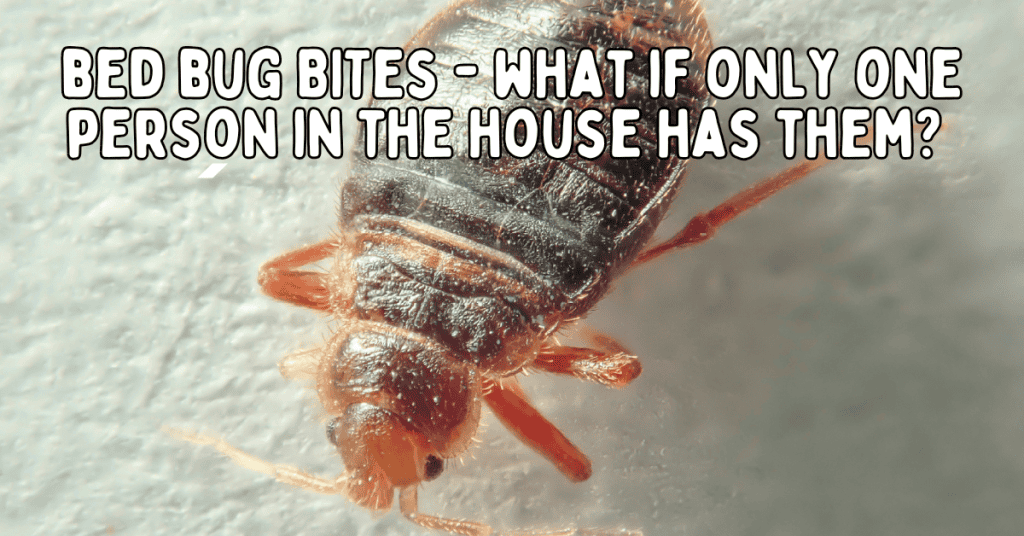
People respond differently to bed bug bites for many factors that aren’t fully understood. Some studies have thought it has to do to with blood types, and others credited it to hormone levels. But what we do know is that two people can sleep in the same bed, both get bitten, and have very different experiences afterward. One may develop itchy bumps while the other has no visible marks.
Did you know reactions can also take time to appear? According to the CDC, some people may not develop marks for up to 14 days. Read here: How long does it take for bed bug bites to show up?
A bump you spot this morning does not necessarily mean something bit you last night. That delay can make it hard to tell when and where the exposure happened. This is how you can bring bed bugs home from vacation. Becasue your bite recations didnt appear until after you already got home and put away your luggage.
If your partner has clear skin, that does not mean yours should look the same. It also doesn’t mean bed bugs prefer you. You cannot tell who was fed on simply by comparing arms. If one person has noticeable bites, it’s not uncommon for them to think the bugs prefer biting them. What folks may not realize is that some humans don’t react to bites.
How Often Does Each Bed Bug Bite?
An individual bed bug does not need to feed every night. Virginia Tech entomologists Dini M. Miller and Andrea Polanco explain that bed bugs usually feed every 3–7 days. After feeding, they return to a hiding place to digest their meal. Bed Bug Biology and Behavior
One of our clients had multiple bite-type reactions in a row, and it turned out not to be bed bugs. Then we have others who have single welts, and it is bed bugs. Despite what you see online under “bed bug pictures” each person has a different reaction.
So, why do we get a line or trail of “bites”? One reason is that a bed bug can pierce the skin a few times before finding a good place to draw blood. Another reason is that a few nymph-stage bugs can line up on a bed sheet, and all draw a blood meal near each other. Yeah, I know this is a disturbing image! In turn, this can show as a linear pattern on your skin. Once the bug finds a good vein, feeding can last 5 to 10 minutes.
So, to recap, bite marks could come from a single bug or a few that are feeding near each other. And because different bugs can feed on different nights, you may notice new marks more frequently than every few days. More importantly, counting bumps will not give you a reliable count of the bugs present. But it can be a clue to the infestation level.
During a Doctor Sniffs Inspection We Look Beyond the Mattress
Our inspections take us beyond mattress seams. During one inspection, Southy alerted near framed artwork, and we found a baby bed bug behind the frame. We have also found bed bug evidence around headboards, in bunk bed corners, and on the bottom of couches.
Seeing where the bugs hide in person, helps us understand the bed bug behavior and where they like to hide. A quick look at the sheets does not cover every possible hiding place.
If only one person reports bites, there is still a reason to investigate. We look for live bugs, eggs, shed skins, and fecal spotting. Virginia Cooperative Extension similarly emphasizes that skin reactions are not a reliable way to identify bed bugs. Bed Bugs: How to Protect Yourself and Your Home
Could the Red Itchy Marks Be From Something Else?
Yes. Unexplained bumps don’t automatically mean you have bed bugs. Even if you have a line or trail of bite-type reactions, it could be from mosquitoes, mites, or something else altogether. If you are getting bitten at night but have no signs of bed bugs, then it could be something else.
Research shows that Bed Bug bites can be mistaken for other insect bites. Plus skin irritation can have other causes, like allergies. Even marks in a line cannot confirm an infestation. A medical professional can evaluate your skin, while an inspection helps determine whether bed bugs are present in your home.
So if one person in the home has bite-type reactions, use a flashlight to check the bed frame, headboard, mattress seams, and nearby furniture. Save any suspicious insect in a sealed container or take a clear photograph for identification. You can text us a photo of whever you find by going to our Doctor Sniffs contact page. Bed bug interceptors underneath suitable furniture legs can also help you monitor and collect evidence.
To warrant an inspection, you don’t need to wait for everyone in the house to start getting the itchy scratchies. One person’s symptoms deserve attention, but confirming the cause takes more than comparing bites.