
You might think storage units are safe places to keep your belongings, but its important to think through the possibility of bed bugs. Yes, storage units can spread bed bugs when infested items are moved in, and in turn, these pests travel between units searching for food or new hiding spots.
These tiny insects are excellent hitchhikers that can easily crawl from one box to another. Plus they can squeeze through small cracks into nearby storage spaces.
At Doctor Sniffs, we’ve searched storage units for a few very different reasons. In one case, a client was moving out of a bed bug-infested apartment and had all of their furniture professionally treated before placing it into storage. They wanted one extra layer of reassurance before storing everything away for several months.
In another case, the situation was reversed. The client was moving their belongings out of storage and into a new apartment, and wanted to make sure nothing had picked up bed bugs while sitting in storage. Those are two completely different scenarios, but both come from the same concern: nobody wants to accidentally carry bed bugs into their next home.

Bed bugs end up in storage facilities when people bring in infested furniture, mattresses, clothing, or boxes without realizing these pests are hiding inside. Once inside your unit, they can survive for months without feeding and may spread to other units through even the smallest openings. The good news is that you can protect your belongings and avoid bringing these pests home.
How Can Bed Bugs End Up in Storage Units?
Bed bugs don’t simply appear in storage units on their own. They arrive as hitchhikers on infested items. Often, it happens without anyone realizing it until the problem has already spread.
Common Ways Infestations Start
Bed bugs are expert hitchhikers that travel on items you bring into your storage space. They don’t appear because a place is dirty or messy.
The most common ways bed bugs get into storage include:
- Moving infested furniture or mattresses during relocation
- Using shared moving trucks that previously carried infested items
- Storing secondhand furniture without inspecting it first
- Placing items from an infested home or apartment into storage
Once inside your unit, these pests hide in furniture cracks, upholstery seams, and other tight spaces. They can stay hidden for months without being noticed.
Some People Put their Stuff in Storage Thinking it Will Get Rid of Their Bed Bugs
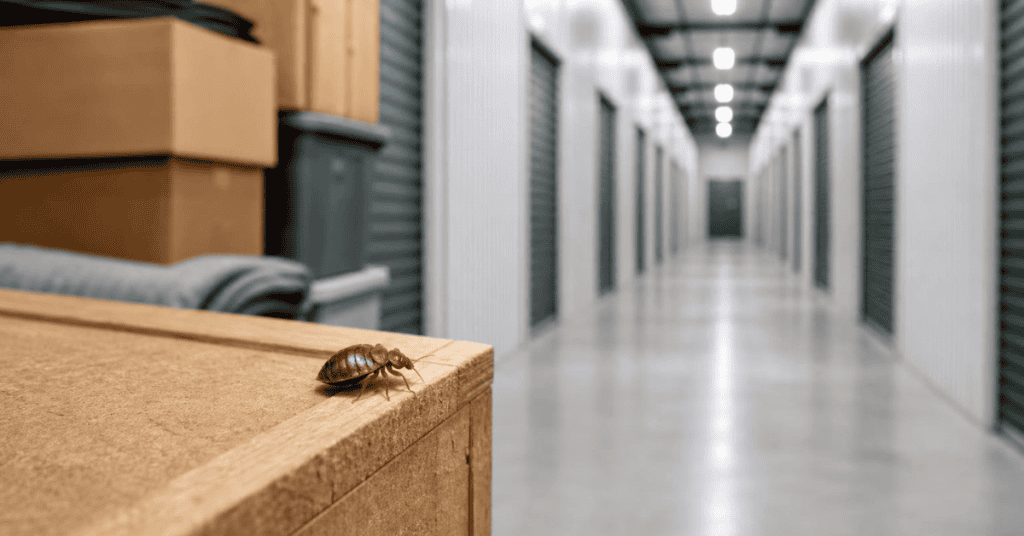
You might think putting your belongings in storage will solve a bed bug problem. This doesn’t work the way you’d hope.
Bed bugs can survive for several months to up to a year without feeding, especially in the stable temperatures found in most storage facilities. They enter a semi-dormant state and wait for their next meal.
Some misinformed people may store infested items, hoping the bugs will die off. Instead, the bugs simply wait. When you bring those items back home later, the infestation starts all over again. This creates a cycle in which you’re essentially storing and spreading your pest problem rather than eliminating it.
Some Folks May not Know They Have Bed Bugs
Many people don’t realize they have bed bugs when they move items into storage. These pests are small and hide extremely well during daylight hours.
Early infestations often go unnoticed because bed bugs are nocturnal and only come out to feed at night. You might have just a few bugs hiding in furniture joints or picture frames without any obvious signs.
Warning signs people often miss include:
- Small dark spots on furniture (bug droppings)
- Tiny whitish eggs in furniture crevices
- Shed skins from molting bed bugs
- A few unexplained bites that seem minor
By the time you notice the problem, you may have already moved infested items into your storage unit. This can quickly lead to bed bugs spreading throughout the storage space.
Items Most Likely to Carry and Hide Bed Bugs
Some items, like furniture or books, are more likely to carry bed bugs into storage. Understanding which ones helps you inspect more carefully before storing anything.
High-risk items include:
Furniture attracts bed bugs because its fabric and wood provide excellent hiding places for these insects.
Role of Cardboard Boxes and Containers
Cardboard boxes create additional problems when it comes to bed bugs in storage units. The material itself gives these pests more places to hide.
Bed bugs can slip into the corrugated layers of cardboard and lay eggs inside the flaps and folds. Once they’re inside cardboard, they’re nearly impossible to spot during a quick inspection.
Plastic bins offer better protection because they have smooth surfaces with fewer hiding spots. They also seal more tightly than cardboard, making it harder for bed bugs to get in or out.
If you must use cardboard boxes, inspect them thoroughly before packing. Then wrap each box with plastic wrap; this will minimize the way in and out.
Never reuse boxes from unknown sources or areas where bed bugs might be present. The small savings on boxes isn’t worth risking an infestation that can bed bugs live in storage for months waiting to spread.
Let’s Talk, Survival of Bed Bugs in Storage
It’s true that Bed bugs can survive for months in storage units without feeding. There are many studies showcasing how long they survive with no blood. Did you know that they change their behavior based on temperature and available hiding spots? Understanding how these pests survive helps you protect your belongings from infestation.
How Long Can Bed Bugs Survive Without Hosts?
Bed bugs can remain dormant for months without food while hiding in your stored items. They don’t need a sleeping human nearby to stay alive.
Adult bed bugs typically survive 4 to 6 months without a blood meal in normal conditions. In cooler temperatures, they can last even longer by slowing down their metabolism.
Young bed bugs, called nymphs, have shorter survival times. They usually last 1 to 4 months without feeding, depending on their development stage. However, some of our training vials for the bed bug dogs have baby bed bugs that lasted longer.
This unbelievably long survival period means a single bed bug tucked into furniture seams. Then it waits for a blood meal, when you move the stuff into your new place. The storage unit essentially preserves them rather than killing them off.
Environmental Factors That Affect Survival
Temperature plays a major role in how long bed bugs survive in storage units. Bed bugs are most active at temperatures between 21°C and 28°C, which is when they reproduce fastest.
Given that they prefer optimal conditions, a climate-controlled storage unit can actually make the problem worse. The stable, moderate temperatures create ideal conditions for bed bugs to survive longer and possibly breed if multiple bugs are present.
Unheated units slow down bed bug metabolism in winter. However, UK winters rarely get cold enough to kill them since sustained temperatures below -16°C are needed for reliable elimination.
Recognizing Signs of Bed Bugs in Stored Belongings
Bed bugs leave behind clear evidence of their presence on items kept in storage. Learning to spot these telltale marks helps you catch an infestation early before it spreads to your home. But if only a few bugs got into your storage unit you may not see any of the tell-tale signs.
Visual Indicators on Stored Items
When you check your stored items, look for blackish ink-like stains. These marks often appear on bedding, clothing, and upholstered furniture.
You’ll notice these dark spots about the size of a period that look like someone marked the fabric with a pen. These tiny, dark spots are bed bug excrement and may bleed into the material. Check the seams, folds, and edges of your stored items carefully.
Pay attention to any items with fabric surfaces or tight spaces where bed bugs can hide. Mattresses, box springs, curtains, and upholstered chairs are common hiding spots.
Common Signs of Infestation
A bed bug infestation shows multiple signs beyond just stains. Look near the piping, seams, and tags of mattresses and box springs where bugs tend to gather.
The bugs themselves are small, flat, and reddish-brown in color. They’re only about the width of a credit card, which means they can squeeze into very tight spaces. If a crack can hold a credit card, it could hide a bed bug. Here is a guide to the bed bug size.
In heavily infested items, you might find bed bugs in drawer joints, between cushions, or even in the head of a screw. Check electrical items, picture frames, and any object with small crevices.
Spotting Shed Skins and Eggs
Bed bugs shed their skins as they grow larger through six life stages. These shed skins are pale yellow and roughly the same shape as the bug itself. You’ll find them in the same areas where you see other signs of bed bugs.
Bed bug eggs are tiny, about 1mm in size, and pale whitish in color. They look like small grains of rice, but are not hard like rice. Sometimes they are clustered together in hiding spots.
A single female can lay 200 or more eggs during her lifetime, so finding eggs means the infestation could grow quickly.
Look for both eggs and shed skins when you inspect your belongings. However, neither of these are easy to spot, especially since they are so tiny, only 1 mm.
Risks of Bringing Bed Bugs Home From Storage
The moment you retrieve items from storage is when you can introduce these creepy crawlies into your home. So first, understand how these pests travel. Then, research specific scenarios that put your home at risk. Doing research will help you protect your living space before bugs cross the threshold.
How Bed Bugs Spread to New Locations
Bed bugs are expert hitchhikers. They don’t fly or jump, but they don’t need to when they can simply hide in the items you’re already moving.
They spread through infested furniture, clothing, or boxes that get transported from one location to another. A single bug tucked into a sofa seam or suitcase lining can establish a new colony once it reaches your home. These pests are small enough to hide in the corrugated layers of cardboard boxes, the folds of curtains, or the joints of wooden furniture.
Common Bed Bug transport methods include:
- Upholstered furniture (sofas, chairs, especially headboards)
- Mattresses and especially bed frames
- Clothing and linens packed in unsealed bags
- Cardboard moving boxes (because they provide hiding spots)
- Luggage and backpacks (esecially if stored under a bed)
Your car or moving van becomes a temporary bridge between the storage unit and your home. If bugs are present on any item during transport, they’ll complete the journey with you.
Scenarios That Lead to Home Bed Bug Infestation
The riskiest moment occurs when you bring stored items directly inside without inspection. Most home infestations from storage happen because people assume their belongings are safe after months of being locked away. It’s always best not to assume anything when dealing with the possibility of bed bugs.
You might unpack boxes in your bedroom or living room, place furniture against walls, or toss bags of clothing onto your bed. Soon enough, any bugs present will migrate to nearby hiding spots close to a blood source.
You could purchase one of the small bed bug heaters and heat treat all of your items for extra insurance. (our affiliate link)
High-risk situations include:
- Moving items straight from the unit to your bedroom
- Unpacking directly onto beds or upholstered furniture
- Storing retrieved items in closets before inspection
- Mixing clean household items with storage items immediately
Climate-controlled storage units can actually preserve bed bugs longer than unheated units. The stable temperatures keep bugs viable for extended periods.
Effective Strategies to Prevent Bed Bugs in Storage Units
Protecting your belongings from bed bugs requires careful preparation before storing items. Plus, using the right containers, like sealed plastic ones. Then lastly, following smart practices while your items are in storage.
Tips Before Storing Items
Clean everything thoroughly before it goes into your storage unit. Dry them on high heat for at least 45 minutes to kill any bed bugs or eggs.
Inspect furniture carefully for signs of bed bugs. Look in cracks, seams, and joints for tiny reddish-brown bugs, dark spots, or shed skins. Vacuum upholstered furniture thoroughly, paying special attention to cushions and the underside.
If you think items might be infested, treat them before storage. You can freeze smaller items for at least four days at 0°F or below. There are methods for using a freezer, so you’ll want to research that before doing it. For larger furniture, consider professional heat treatment or pest control services before placing items in your unit.
Check mattresses and box springs carefully, as they are common hiding spots. Use a flashlight to examine seams, tags, and corners where bed bugs often hide.
K9 Inspection Before and After Using a Storage Unit

We have done many K9 inspections in storage units. It can create peace of mind that is needed when dealing with the possibility of bed bugs. Clients become visibly relieved after a clean K9 inspection before moving into a new apartment.
The photo above shows Southy alerting in a storage unit. The resident was moving from a building that had an ongoing bed bug issue. Their building had bugs migrating in from other apartments, so this resident decided it was time to move. Since our dog alerted to the presence of bed bugs, the client knew they needed to heat-treat everything before moving it into a new apartment.
If the storage unit is packed floor to ceiling, we sometimes have clients temporarily line boxes up so the dog can sniff each one individually. However, storage units should never be used as a quarantine area for infested furniture. Because this is how things can spread.
The Best Containers and Packing Methods for Bed Bug Prevention
Avoid cardboard boxes when storing items in storage units. Too many hiding spots. Bed bugs can slip into cardboard, and you wont even see them. Use hard plastic bins with tight-fitting lids instead.
Seal cleaned items in plastic containers with lids that are airtight. Doing this one step will go a long way in prevention.
For mattresses and upholstered furniture, usebed bug-proof encasements. These special covers zip closed and prevent bed bugs from getting in or out. But also make sure to place one of the plastic mattress bags over the whole thing. Because you’ll want to remove the plastic mattress cover before bringing introducing it into your home again.
Vacuum-sealed bags can work for clothing and linens, but only if items are completely clean first.
Bed bugs can survive inside vacuum-sealed bags for months if they were already present when you sealed them.
Treatment and Professional Help for Storage-Related Infestations
Bed bug problems in storage units require quick action and expert knowledge. Professional pest control services offer specialized treatments that DIY methods can’t match, while preventive programs help keep your stored items safe from future invasions.
Bed Bug Dogs Can Help Confirm or Deny the Presence of Bed Bugs
A K9 inspection with a trained, certified bed bug dog can help during a storage unit inspection. We will usually figure out a plan once we know how packed the storage unit is. Some storage unit searches can actually be surprisingly methodical. If the unit is heavily packed with boxes, we’ll sometimes have the client temporarily line the boxes up in rows so the dog can sniff each one individually.
It gives the dog a clearer scent picture, rather than having hundreds of odors compressed into one tight space.
Each inspection scenario is unique, and we will guide you on what the best practice is for your situation.
When to Seek Professional Pest Control
You should call professional pest control as soon as you spot signs of bed bugs in your storage unit. Small dark spots on items, shed skins, or actual bugs mean the problem needs expert attention.
DIY treatments rarely work for bed bug infestations because these pests hide in tiny cracks and can survive extreme conditions. They can live a year without feeding and withstand a wide range of temperatures.
A good, knowledgeable pest control person will have the training and tools to find all hiding spots. Plus they can guide you over the phone on where to look.
There are unique risks of spreading bed bugs between units, which makes professional help even more important.
Treatment Options for Affected Storage Units
Pest control companies offer several proven methods for treating storage units. Heat treatment raises temperatures high enough to kill all bed bugs and their eggs throughout the entire space.
But usually, they will bring in heat chambers and instead heat your stuff inside a closed container. This is because if they just heat up your entire storage unit, then the bugs can escape the heat and migrate into other units.
Chemical treatments use EPA-approved pesticides applied to affected areas and potential hiding spots. Many professionals combine both approaches for the best results.
Common treatment methods include:
- Heat remediation that heats units or the belongings inside of the bed bug oven to lethal temperatures
- Targeted chemical applications in cracks and crevices
- Fumigation for severe infestations / or peace of mind treatment
- Follow-up inspections to confirm elimination
If you are concerned about bed bugs in your storage unit, start with a bright flashlight and inspect every item. If inspecting it on your own is too much trouble, you hire it out. Hire a trained and certified bed bug dog company (like us at Doctor Sniffs). Or better yet, use a fumigation moving truck to treat all of your belongings as a sure-fire peace of mind move!