
If you’re trying to confirm bed bugs, nymphs are the stage that most often slips past people’s “I know what a bed bug looks like” confidence. They’re smaller, lighter, and way more invisible on fabric seams than you’d expect. The tricky part is that nymphs are still bed bugs in every practical sense: they bite, they hide, and they grow fast under good conditions. And because they’re part of a simple (incomplete) metamorphosis, they don’t go through a larval stage that looks totally different. They basically start as mini bed bugs and keep upgrading until adulthood.
1) A bed bug nymph looks exactly like the adult, only smaller
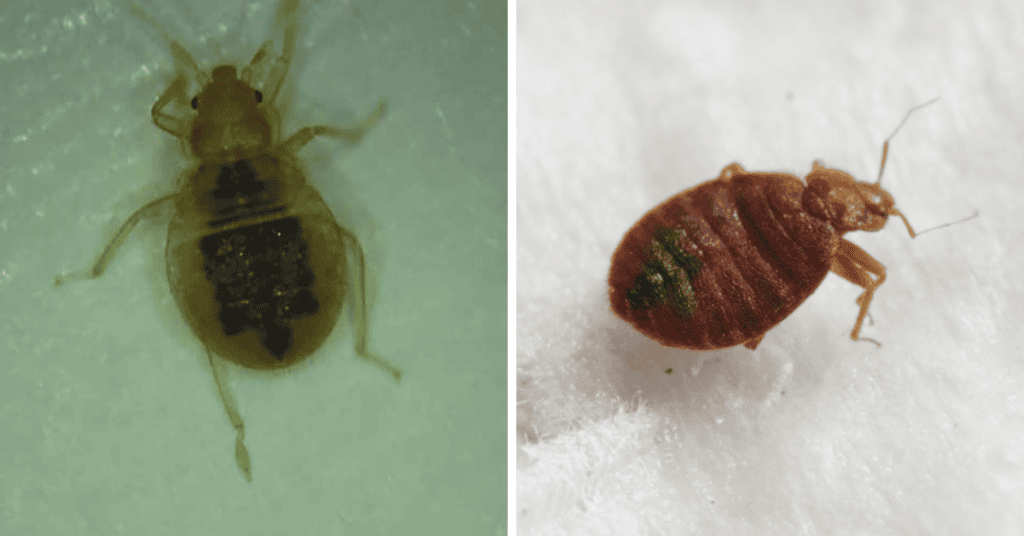
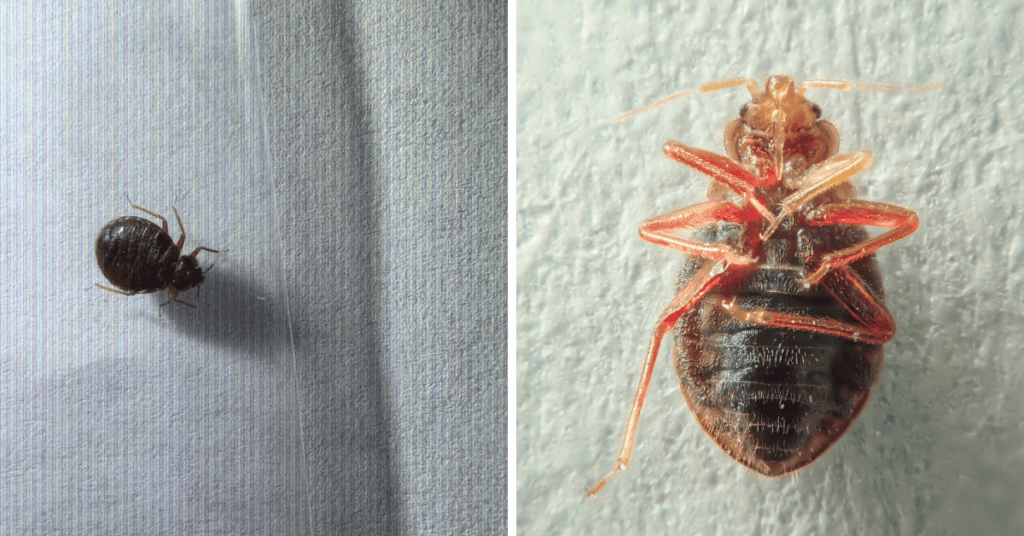
Nymphs (immature bed bugs) are essentially scaled-down adults. Same general oval shape, same “apple seed” vibe once they’re older, and the same habit of tucking themselves into seams, cracks, and crevices. The main visual differences are size and paleness, especially in younger instars.
This is why a quick visual ID can go sideways. When a customer says, “It looked like a tiny bed bug,” they might be right… but “tiny” also describes many other insects. In practice, you’re looking for that classic bed bug silhouette. Being flat when unfed, more swollen after feeding. Plus pay attention to where it was found (mattress seams, headboard cracks, couch joints).
A useful size anchor from field and lab references: unfed first instars are around 1 mm, while adults are typically around 5–7 mm. That’s a big gap in real life, especially when the bug is moving, and you’re trying not to panic.
2) A “baby bed bug” is called a bed bug nymph (and the stages are called instars)
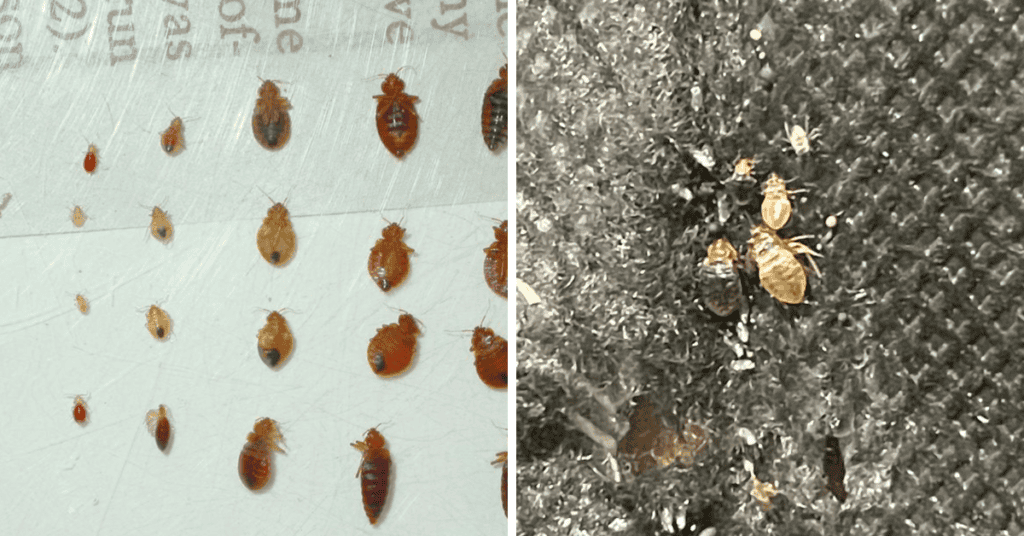
In scientific and entomology writing, “nymph” is the standard term for an immature stage of insects that develop by incomplete metamorphosis. Bed bugs are in the order Hemiptera, so they don’t have a worm-like larva the way flies do. They hatch as a nymph and then molt through successive nymphal stages (instars) until adulthood.
You’ll also see “instar” used a lot in bed bug literature because it’s more precise. “Nymph” tells you it’s immature; “first instar” tells you it’s the just-hatched stage, and “fifth instar” tells you it’s one molt away from becoming an adult. Public health and extension references commonly describe bed bugs as having eggs, five nymphal instars, and then adults.
3) When a bed bug hatches, it’s light tan or straw-colored until it takes a blood meal
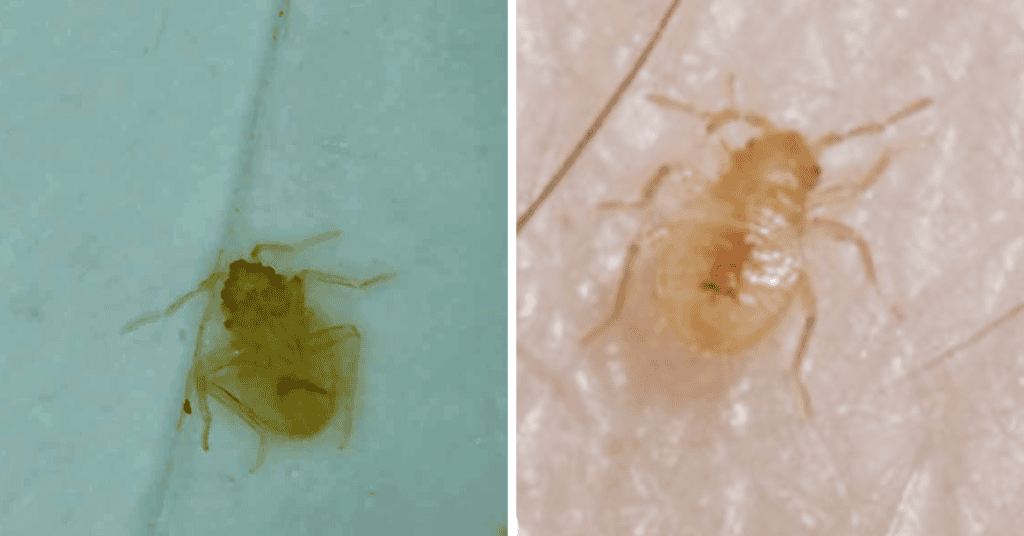
Newly hatched nymphs are famously hard to spot because they can look nearly colorless, straw-colored, or very pale. Like this photo below, after feeding, the blood shows through their body. For a short time, they can look bright red before darkening as digestion progresses.
That “see-through” quality is exactly why early infestations can go unnoticed People expect a clearly brownish-red bug, but first instars can blend into light fabrics, wood grain, and dust. If you’re inspecting, you’re often better off looking for other evidence (fecal spotting, cast skins, bed bug eggs in crevices) instead of expecting the youngest nymphs to pop visually.
4) A bed bug nymph goes through 5 growth stages before adulthood (and each stage needs feeding)
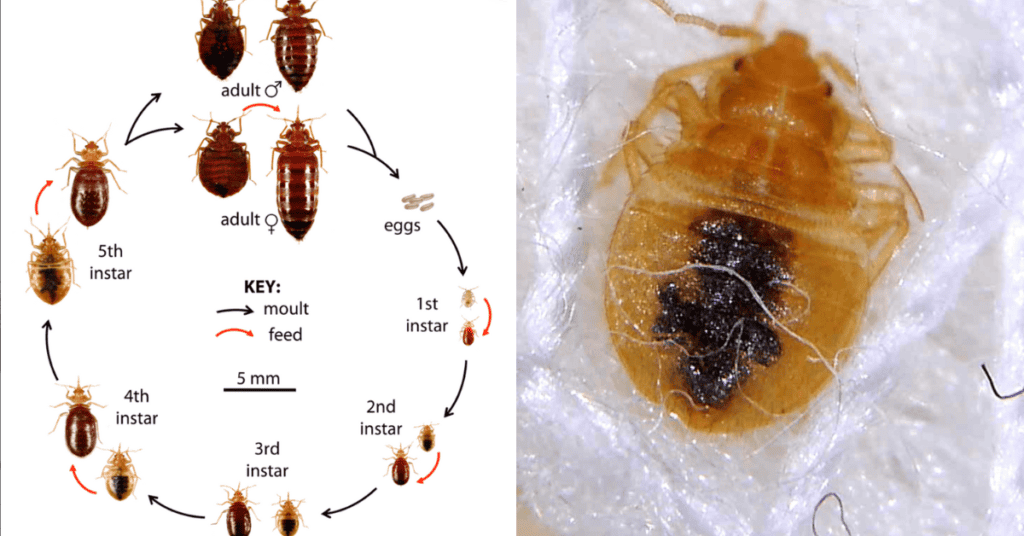
Bed Bugs grow by molting, meaning they shed their exoskeleton and “step up” to the next instar. Bed bugs have five nymphal instars, and a blood meal is required between molts to successfully develop to the next stage.
Did you know that under warm, optimal conditions near a human host, like those you find indoors, the egg-to-adult timeline can be surprisingly fast? Researchers and public health references commonly cite a development time of roughly 1 to 2 months. But this all depends on temperature and access to blood meals. Limited feeding is what really slows it down.
Dini Miller (Virginia Tech) has taught this life-cycle point very clearly in bed bug training materials: there are five nymphal instars, and each instar requires a blood meal to molt. Previous literature states that newly hatched first instars can begin dying within a few days without a blood meal. However, we have found that newly hatched first instars do NOT begin dying right away without a blood meal. We know this firsthand because we keep the bed bugs in glass vials with screens for training the bed bug detection dogs. There are nymphs moving in the vial after months of no blood. In other words, nymphs are not dying as fast as previously thought.
5) Baby bed bugs can’t lay eggs (only adults reproduce)
Nymphs bite and grow, but they don’t reproduce. Reproduction is an adult-stage function in bed bugs: the insect becomes sexually mature after the final molt into adulthood. EPA educational materials and universities, such as the NCSU entomology department, describe the life stages as five immature nymphal stages followed by a final sexually mature adult stage.
This is a useful mindset shift if you’re assessing risk. Seeing nymphs is still serious (it usually means there are adults somewhere, or there were very recently). But it’s the adult females that are laying eggs and accelerating population growth. Keep in mind that, adult bed bugs need regular blood meals to reproduce. So infestations will get bad when hosts are consistently available. Learn more about the differences between a few bugs vs an infestation.
TO NOTE: if you’re finding multiple nymph sizes (not just one tiny stage), it often suggests the population has been feeding and molting over time, not a one-off hitchhiker. That’s why pros pay attention to mixed stages during inspections.