
After 15 years in the bed bug industry, I can tell you this with confidence: bed bugs will rarely behave the way people expect them to. Some of what I’ve learned came from textbooks and training manuals, but most didn’t. My experience comes from thousands of inspections. Plus anxious phone calls and former clients who still text me photos years later, asking, “Is this one?”
For sure, I get it. Once you’ve dealt with bed bugs, you never quite forget them.
Here are some of the biggest Bed Bug facts that throw people for a loop, even after all these years.
Bed Bugs Can Turn Up Anywhere
Most people assume bed bugs are a problem in hotels or big-city apartments. In reality, they show up wherever people sit still for long enough.
One of my former clients has a deep fear of bed bugs and stays in touch with me regularly. They’ll text photos anytime they see a suspicious bug, even years after their inspection. Recently, they were traveling in a seaside town in New England and sent me photos from a restaurant. This time, it wasn’t a false alarm. The bugs they found were confirmed as bed bugs.

Finding bed bugs in a restaurant chair isn’t common, but it’s also not shocking if you understand how they move. Bed bugs hitchhike. They come in clothing, bags, coats, and purses. Anywhere people sit is fair game.
After confirming the ID, I walked them through preventative steps before heading home. Simple things like isolating clothing, careful laundering, and not bringing items directly inside can make a real difference. That moment reinforced something I see over and over again. Bed bugs don’t stay neatly confined to beds or bad buildings. They follow people.
Not Everyone Reacts to Bed Bug Bites
One of the most damaging myths about bed bugs is that everyone reacts to the bites. That’s just not true.
A controlled laboratory study allowed bed bugs to feed on human volunteers. However, only about 70 percent of people developed a visible skin reaction. The other 30 percent showed no marks at all, despite being bitten.

I see this play out in real life all the time during my inspections. One person in a household has itchy welts, while another insists nothing is happening to them. That doesn’t mean the second person isn’t being bitten. It just means their immune system responds differently.
This is one of the main reasons infestations go undetected for so long. People assume no bites means no bed bugs, and by the time visible signs appear, the population has already grown.
Bed Bug Bites Don’t Always Show Up in Lines or Clusters
Another misconception I spend a lot of time correcting is the idea that bed bug bites always appear in neat lines or clusters.
In reality, bites can show up as a single mark, scattered spots, or delayed reactions that appear days later. Some people react immediately. Others don’t see anything until the immune system catches up. Scratching, skin sensitivity, and secondary irritation can further distort what the bites look like.
I’ve worked with clients who were convinced they couldn’t have bed bugs because they only had one bite. Others had reactions that looked more like rashes than bites at all. The pattern tells you very little on its own.
This is why visual bite analysis is never a reliable way to confirm or rule out bed bugs.
People Often Notice the Effects Before They Ever See a Bug
Most clients don’t call me because they found a live bed bug crawling across the bed. They call because they are getting some sort of bite-like reaction.
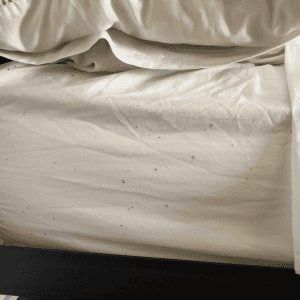
It might be unexplained itching, tiny black specks along a mattress seam or headboard, or stains they can’t quite identify. Bed bugs are nocturnal, excellent at hiding, and very good at staying out of sight. Many infestations exist long before someone ever sees a bug in the open.
I’ve inspected tons of homes where people were certain they didn’t have bed bugs because they “would have seen one by now.” In many cases, the bugs were there the entire time, tucked deep into cracks, furniture joints, or behind baseboards.
Self-Treatment Attempts Can Make Infestations Worse
One of the hardest parts of my job as a K9 handler for a bed bug-sniffing dog is explaining that well-intentioned DIY treatments often backfire.
Diatomaceous earth is a big one. It’s frequently misapplied in thick piles, which bed bugs simply avoid. Worse, heavy dusting can contaminate the environment and become airborne. This will interfere with professional inspections, including canine detection.
Most DIY sprays don’t kill bed bugs on contact. Instead, they act as repellents. When bed bugs are exposed to these products, they scatter deeper into walls, furniture, and adjacent rooms. So, what started as a localized issue becomes much larger.
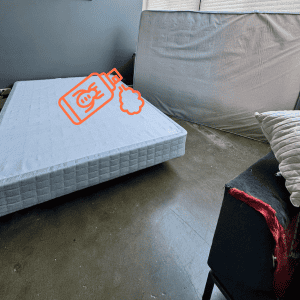
I’ve seen infestations spread through entire apartments because of aggressive DIY attempts. The goal should always be to work with a licensed Bed Bug specialist.
The Mental Toll Is Real
Something that doesn’t get talked about enough is the mental impact of bed bugs.
Even after an infestation is resolved, many people struggle with anxiety, hypervigilance, and sleep disruption. I still hear from former clients years later who second-guess every itch or speck of lint. That fear doesn’t mean they’re irrational. It means the whole Bed Bug situation left a lasting mark that’s hard to shake.
Understanding how bed bugs actually behave helps people regain a feeling of control. Knowledge doesn’t erase the experience, but it does make it manageable.
Final Thoughts
After 15 years, the biggest lesson I’ve learned is that bed bugs aren’t just a pest problem. They’re a human problem. They exploit habits, travel, misunderstandings, and fear.
The more people understand what’s normal, what’s a myth, and what actually works, the less power bed bugs have over them. And if there’s one thing I’ve learned for sure, it’s that asking questions early beats guessing every time.