
Sometimes, past bed bug trauma has a funny way of resurfacing and coming back out years later. A triggering thought, an itch, a hotel stay, a neighbor mentioning pests, and suddenly your nervous system is right back there.
If this is you, just know it does get better.
The goal here is not to eliminate fear completely, but to reduce how much control it has over you. These are things you can actively do that help both practically and mentally.
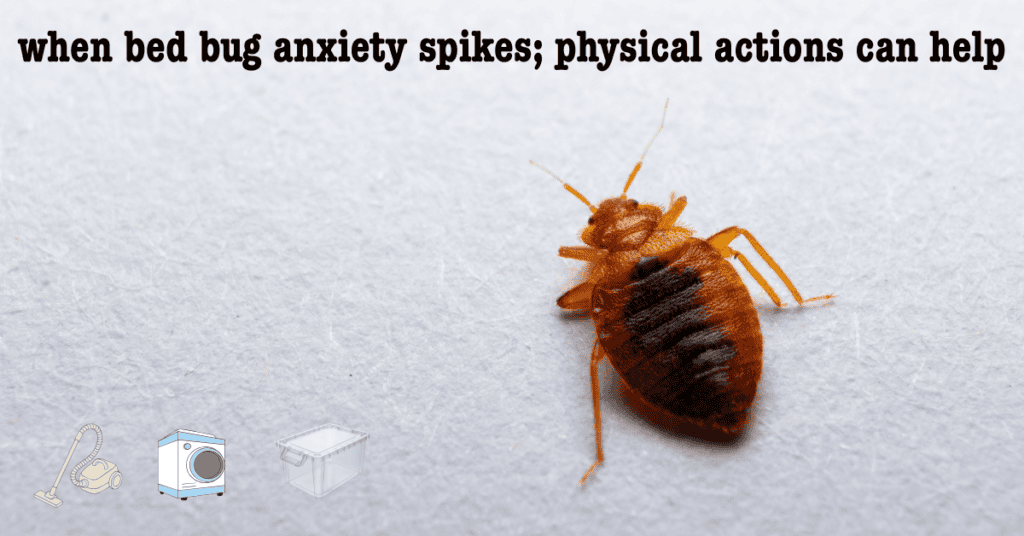
Use Actions like Vacuuming to Calm the Mind
When anxiety spikes, the brain wants certainty. Physical action can help provide it.
Vacuuming your bed frame, headboard, and cracks where it meets the wall with a narrow crevice tool can be grounding. It’s a reasonable, contained task addressing anxiety, not just fear.
For example, many people tell us they vacuum once, and in turn sleep better that night. Then they don’t feel the urge to recheck everything repeatedly. That’s because action helps interrupt rumination.
Sometimes doing something physical reminds your brain that you’re not helpless.
Put a “Coming Home” Routine in Place
Trauma thrives on uncertainty. Routines reduce it. Even if there’s no real risk that day, the routine creates a sense of closure. Many clients tell us that once this becomes a habit, their anxiety drops dramatically because their brain learns, I’ve already handled this. Plus if you are one of those people who does not react to bed bug bites, then this routine will be how you prevent furture infestations.
- Designate a landing zone near your front door for bags, coats, and shoes.
- Put travel or work bags into a Thermal Strike Ranger or high heat dryer. Heat above 120°F kills all bed bug life stages.
- Even when there’s no suspected risk, doing this ritual creates a sense of closure. Your brain learns, I’ve handled this.
Steam as Maintenance, Not Panic
Scheduling behaviors like steaming makes them less likely to become compulsive. People often steam constantly after a suspected infestation. This can exacerbate trauma. Assigning a set schedule shifts it from fear-driven action to routine maintenance.
- Steam your bed frames, floors, seams, and cracks every few months, not daily.
- Important because it reframes steaming as maintenance. Instead of an emergency behavior.
- Steam is effective because it delivers lethal temperatures instantly, without chemicals.
Use Mattress and Box Spring Encasements
Encasements are underrated recovery tools. Many sleep better knowing bed bugs can’t hide in mattresses or box springs. Fewer hiding spots, less spiraling.
- High-quality encasements trap pests and prevent new ones from hiding there.
- They remove the “what if” factor from the largest surface you sleep on.
- Smooth white fabric also makes visual inspections easier and faster.
- It reduces the hiding spots with a seamless white cover. Then you can spot the early signs of bed bugs quickly.
Do Short, Timed Visual Checks
Cognitive-behavioral research shows that time-limited inspections can prevent anxiety from escalating into out-of-control thought loops. We’ve worked with people who spent hours checking nightly. Some of our clients will text us photos of every little thing they find. In most cases the things they find are not realted to bed bugs. Setting a timer gives your brain a clear boundary. You did the check. It’s done.
- Set a 5-minute timer once a month to check known bed bug zones.
- Focus only on seams, bed frame joints, and behind the headboard.
- When the timer ends, stop.
Understand What Actually Indicates Risk
Education is grounding. Knowing what doesn’t count as evidence helps interrupt catastrophic thinking. We see a lot of anxiety caused by misinformation. Knowing what does not equal a bed bug problem can be just as calming as knowing what does.
- Random itching, phantom crawling sensations, or stress rashes are not reliable indicators.
- Most people don’t react to bites at all, and reactions can take days to show. Look at our article on bed bug bites.
- Visual confirmation or canine detection is the gold standard.
Schedule Preventive Inspections
Our company, Doctor Sniffs, does routine bed bug inspections for people all over NYC. We can help give you that peace of mind. Many clients say simply knowing they have a future check on the calendar helps them relax in the present.
- Annual or post-travel canine inspections provide objective reassurance.
- Dogs detect live bed bugs, not fear or assumptions.
- Having a future inspection scheduled often reduces your current anxiety.
Limit Information Overload Regarding Bed Bugs
Constant Googling keeps the bed bug trauma active. Trauma research shows that repeated exposure to triggering content can keep the nervous system stuck in “on” mode. Limit exposure and rely on consistent habits instead.
- Choose one trusted source for bed bug information.
- Avoid late-night searching, which increases anxiety late at night.
- If you catch yourself scrolling, redirect to an action you’ve already chosen.
Reframe Control of Your Situation vs. Elimination
This is a big one. This mindset alone can reduce fear, anxiety, and negative spiraling thoughts. You don’t need to do everything. You just need to do enough, consistently.
- No home is ever zero-risk, but risk can be managed.
- The goal is preparedness, not perfection. Staying prepared, implemeting the prevention techniques we lay out in this article will reduce your anxiety. Then in turn you’ll get more peace of mind.
- Every action you take shifts the odds in your favor.
Healing from bed bug trauma isn’t about pretending it never happened. It’s about rebuilding trust in your space, one reasonable step at a time. You don’t need to check everything, know everything, or control every possibility. Use a clear plan, take action, and give yourself permission to feel safe once you’ve done enough.